Installing solar panels is a major home improvement, not a quick purchase. The right system can reduce electricity costs, improve energy resilience, and support cleaner power. However, results depend on your roof, local climate, energy habits, and installation quality.
So, what should you consider before installing solar panels? Start with the roof beneath the equipment. Check its age, structure, direction, and daily shade from trees or nearby buildings. A roof replacement may be cheaper before installation, rather than after panels cover it. Review twelve months of electricity bills, not just one high summer statement. This reveals your actual usage pattern.
Small details matter.
A qualified installer should inspect the roof, explain system sizing, and provide written production estimates. Ask about licenses, insurance, warranties, monitoring, and previous local projects. Compare several detailed quotes. The cheapest offer may hide weaker equipment or limited service support. Check available incentives through official government or utility websites, since eligibility and deadlines can change.
Consider whether your household needs battery storage, backup power, or only lower daytime bills. Confirm how panels connect to the grid and whether your utility uses net metering or another billing method. Maintenance is usually limited, but dust, snow, leaves, and unusual weather can affect production. I have seen homeowners focus on panel price while overlooking electrical upgrades and roof repairs. That is an easy mistake.
This guide explores ten practical issues before you sign a contract. It encourages careful questions, realistic calculations, and independent verification. Solar power can be an excellent investment, but only when the system fits the home.
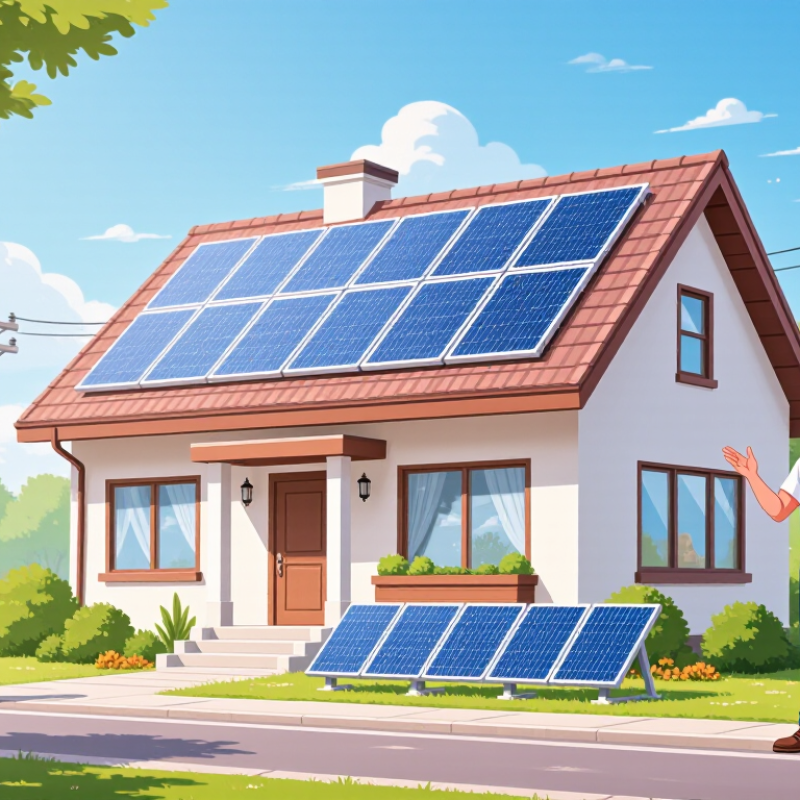
Before installing solar panels, assess how much sunlight your roof truly receives. A bright roof can still lose production to trees, nearby buildings, or seasonal shadows. The National Renewable Energy Laboratory reports average photovoltaic degradation of roughly 0.5% each year. This means a system may produce about 90% of its original output after 20 years, assuming steady conditions. It is not a guarantee. Heat, moisture, installation quality, and local weather can change the result. Small differences matter.
Measure sunlight across several months, not only on a clear afternoon. A chimney shadow at 9 a.m. may cover several panels during winter. Request a production estimate that explains shading, roof direction, tilt, and expected degradation. Compare those assumptions with your electricity bills. A careful site inspection should also check roof age, attic ventilation, wiring, and access for maintenance. Replacing an old roof later can disturb the array and increase costs. That detail is easy to miss.
The 0.5% figure should shape your financial planning. Use conservative estimates instead of assuming perfect performance forever. Dust after dry weeks, fallen leaves, and heavy snow can reduce output beyond normal degradation. Keep monthly meter readings and photographs of the equipment area. A simple record can reveal unusual drops before they become expensive. Predictions can be too neat. Local measurements may expose weaknesses in the original assessment, especially when afternoon shade changes as trees grow.
Before installing solar panels, check whether the roof can outlive the equipment. The U.S. Department of Energy reports that residential solar panels commonly last 25–35 years. A roof with only eight years remaining may create an expensive removal and reinstallation problem. Look for curling shingles, soft decking, water stains, and sagging areas around rafters. Small warning signs matter.
Load capacity needs professional review. A typical rooftop array may add about 2–4 pounds per square foot, depending on panel size and racking. Snow, wind, maintenance workers, and mounting points add more force. A licensed structural professional should verify the roof under local building requirements. Do not rely on a visual inspection alone. It can miss weakened rafters.
Warranty language deserves equal attention. Many modules offer 25–30-year performance coverage, but product terms, labor, and removal costs can differ. The National Renewable Energy Laboratory reported a median module degradation rate near 0.5% annually in its field-performance research. That means output gradually falls, even when panels remain functional. Ask for the exact degradation schedule, transfer rules, exclusions, and workmanship coverage. I would also photograph the roof before installation. That simple record can clarify later disputes. Frankly, I once underestimated how much contract wording matters; the headline warranty was not the whole protection.
Before installation, compare the roof’s remaining service life with the panel warranty period. Typical roof lifespans vary by material: asphalt shingles generally last 15–30 years, metal roofing 40–70 years, clay or concrete tile 50–70 years, and slate 75–100 years. Solar panel product and performance warranties commonly cover 25–30 years, so a roof replacement may need to be completed before installation if its remaining life is shorter than the planned solar system life.
A larger solar array is not automatically a better investment. Start with your annual electricity use, then compare expected production. The U.S. Energy Information Administration reports capacity factors for utility-scale solar, commonly near one-quarter in recent data. This means a 10-kilowatt system does not produce 10 kilowatts all day. Its annual output is estimated as 10 × 8,760 × the capacity factor.
Use this figure as a planning reference, not a promise. Rooftop systems may perform differently because of shade, roof direction, snow, dust, and inverter limits. A south-facing roof with clear afternoon sunlight can outperform a shaded roof with the same panel capacity.
Check twelve months of utility bills. Then compare that demand with local solar estimates and the EIA benchmark. Winter production may disappoint, especially when heating increases consumption.
A site inspection matters. Ask for shading measurements, production assumptions, equipment losses, and a month-by-month estimate. Confirm whether the design includes future electric vehicles, heat pumps, or battery charging.
Oversizing can increase costs and unused production. Undersizing can leave your household buying substantial grid power.
The difficult part is admitting that the “ideal” size may change after one year of real weather. That is worth considering.
Before installing solar panels, calculate the real value of available incentives. The 2024 Solar Industry Insight report recorded 32.4 gigawatts of new U.S. solar capacity in 2023. However, national growth does not guarantee local savings. Check federal, state, and utility programs carefully. Confirm eligibility, tax treatment, deadlines, and possible income limits. Ask for a conservative production estimate, not a perfect-weather promise. Not every roof qualifies.
Permits and interconnection deserve equal attention. Your installer may need building, electrical, and utility approvals before the system operates. Lawrence Berkeley National Laboratory’s 2024 Queued Up report identified more than 2,600 gigawatts of generation and storage capacity in U.S. interconnection queues. That broader congestion can signal delays. Ask who submits documents, pays fees, answers corrections, and schedules inspections. Do not confuse permission to build with permission to export electricity. Timelines can slip.
Tip: Request three itemized bids and compare more than price. Lawrence Berkeley National Laboratory’s 2024 Tracking the Sun report placed the median residential system price near $3.3 per watt in 2023. Verify the installer’s license, insurance, relevant certification, references, and complaint history. Review roof-penetration methods, workmanship coverage, production assumptions, monitoring, and transfer terms. I would also question my own assumptions: a sunny roof may still have shading, aging materials, or structural repairs. One missing contract detail matters.
Before installing solar panels, plan for the years when sunlight is weak and household demand remains high. A battery can store midday electricity for evening cooking, heating, or medical equipment. However, its usable capacity declines over time, and replacement may arrive earlier than expected. Ask for written figures covering round-trip efficiency, expected cycle life, warranty terms, and installation labor. A simple load review can expose problems: a family using an induction cooker at 7 p.m. needs different storage than a rarely occupied home. Oversizing the battery is expensive. Undersizing it can be frustrating.
Maintenance is usually manageable, but it is not zero. Keep access paths clear, inspect cables after severe weather, and arrange periodic checks by a qualified electrical professional. Dust, shading, inverter faults, and loose connections can reduce output. Record annual production, unusual sounds, and warning messages. These notes help separate normal aging from a service issue. I have seen optimistic payback estimates ignore cleaning, monitoring, and future component replacement. That weakness deserves attention.
Ask how damaged panels, batteries, and inverters will be collected and processed in your area. Recycling routes differ, and transport or handling fees may fall to the owner. Include those costs in a long-term budget, along with roof repairs and possible removal before reroofing. Some assumptions will be wrong. Review them every few years, especially after changes in electricity use, household size, or local disposal rules.
| No. | Consideration | What to Evaluate | Typical Planning Data | Key Cost or Risk Factor | Recommended Action |
|---|---|---|---|---|---|
| 1 | Electricity Usage and System Size | Review at least 12 months of electricity bills, seasonal demand, future home additions, and available roof or ground-mount area. | A typical home system may be approximately 5–15 kW, depending on household consumption and sunlight. | Oversizing can increase upfront cost, while undersizing may leave a large electricity bill after installation. | Use interval or monthly consumption data and obtain a production estimate based on the site’s actual solar resource. |
| 2 | Roof Condition, Orientation, and Shading | Check roof age, structural condition, pitch, direction, nearby trees, chimneys, and obstructions that cause shade. | Solar output is generally highest on unshaded surfaces with good exposure toward the sun; exact results depend on location and orientation. | Replacing a roof after installation can require panel removal and reinstallation, adding labor and scheduling costs. | Complete a roof inspection before signing a contract and address major repairs or replacement first. |
| 3 | Permits, Interconnection, and Local Rules | Confirm building permits, electrical approvals, utility interconnection requirements, export limits, and local fire-access rules. | Approval timelines commonly range from several weeks to several months, depending on the authority and utility. | A system may be unable to operate or export power until inspections and utility approval are complete. | Ask the installer to list every required approval, responsible party, expected deadline, and included fee. |
| 4 | Electricity Rates and Export Compensation | Compare current energy charges, fixed charges, time-of-use rates, demand charges, and the value paid or credited for exported electricity. | Savings depend on when electricity is generated and consumed, not only on total annual production. | Changes to utility tariffs or export-credit rules can materially affect the payback period. | Model several scenarios, including lower export credits, higher evening usage, and future rate changes. |
| 5 | Battery Storage Capacity and Use | Decide whether the priority is backup power, higher self-consumption, peak-rate reduction, or limited grid reliance. | Residential batteries are commonly sized in the range of roughly 5–20 kWh; usable capacity is lower than nameplate capacity. | Battery cost, usable capacity, round-trip losses, power rating, temperature, and cycle life affect value. | Specify essential circuits, required backup duration, recharge strategy, and whether the battery can operate during a grid outage. |
| 6 | Upfront Cost, Financing, and Incentives | Compare cash price, loan terms, interest, fees, incentives, tax treatment, and the effect of financing on total lifetime cost. | A residential solar-plus-storage project generally costs more than a solar-only project; pricing varies substantially by region and site complexity. | A low monthly payment can conceal a longer repayment period, escalation clause, or higher total amount paid. | Request an itemized cash quote and calculate total payments, estimated savings, and payback under conservative assumptions. |
| 7 | Performance, Warranties, and Degradation | Review equipment warranties, workmanship coverage, production guarantees, exclusions, and the process for making a claim. | Solar modules commonly lose a small percentage of output each year; many are designed to retain approximately 80% or more of initial output after 25 years. | Warranty length does not guarantee performance if installation, monitoring, or claim-support terms are unclear. | Keep warranty documents, installation records, serial numbers, and monitoring data in a permanent home file. |
| 8 | Maintenance and Monitoring | Plan for visual inspections, inverter alerts, vegetation control, storm checks, and occasional cleaning where local conditions require it. | Solar panels generally have no moving parts; maintenance needs are often limited, but dust, pollen, snow, leaves, and bird debris can reduce production. | Cleaning is not automatically beneficial in every climate and may be unnecessary when rainfall keeps panels reasonably clear. | Use system monitoring, investigate sustained production drops, and hire qualified electrical personnel for repairs or rooftop work. |
| 9 | Insurance, Safety, and Emergency Access | Check homeowner or property insurance, electrical-panel capacity, rapid-shutdown requirements, battery location, ventilation, and access for firefighters. | Additional equipment or electrical upgrades may be required if the existing service cannot safely accommodate the system. | Improper installation can create shock, fire, water-intrusion, or roof-damage risks and may affect insurance coverage. | Use properly licensed professionals and notify the insurer before installation or when adding battery storage. |
| 10 | Recycling and End-of-Life Costs | Plan for eventual removal, transportation, recycling, disposal, roof restoration, battery handling, and replacement of inverters or batteries. | Panels often operate for about 25–35 years; inverters may require replacement sooner, and batteries generally have shorter service lives than panels. | Recycling access and fees vary by location; disposal rules for batteries and electrical equipment may be stricter than for ordinary waste. | Ask who owns the equipment at the end of the agreement, who pays removal and recycling costs, and whether a decommissioning provision is included. |
Check federal, state, and utility programs separately. Confirm eligibility, deadlines, tax treatment, and income limits. National growth does not ensure local savings. Ask for written calculations, not cheerful guesses.
Request a conservative estimate based on shade, roof direction, weather, and local conditions. Avoid perfect-weather promises. A sunny roof may still lose output from nearby trees. I might overestimate savings myself, so I would compare assumptions carefully.
Building, electrical, and utility approvals may all apply. Ask who submits documents and pays each fee. Confirm who handles corrections and inspection scheduling. Permission to build is not permission to export electricity.
Request three itemized bids. Compare equipment, labor, warranties, monitoring, roof work, and production assumptions. The cheapest bid may omit important services. One missing contract detail matters.
Check licenses, insurance, relevant certifications, references, and complaint history. Review roof-penetration methods and workmanship coverage. Confirm transfer terms if you sell the property. Ask questions in writing.
No. Battery needs depend on evening demand, outages, electricity rates, and household routines. A family cooking at 7 p.m. needs different capacity than an empty home. Bigger is not always better.
Ask for usable capacity, round-trip efficiency, cycle life, warranty coverage, and installation labor costs. Usable capacity declines over time. Replacement may arrive sooner than expected. Plan for that possibility.
Keep access paths clear and inspect cables after severe weather. Arrange periodic checks with a qualified electrical professional. Record annual production, warning messages, and unusual sounds. Maintenance is manageable, but not zero.
Ask how panels, batteries, and inverters are collected locally. Transport and handling fees may belong to the owner. Include roof repairs, component replacement, and possible removal before reroofing. Review the budget every few years.
Before installing a solar energy system, homeowners should evaluate their property, finances, and long-term energy goals. A key question is what should you consider before installing solar panels? Start by assessing the roof’s sunlight exposure, shading, age, structural condition, and load capacity. Solar panels may gradually lose performance, with annual degradation often estimated at around 0.5%, so confirm that the roof and equipment warranties—typically lasting 25 to 30 years—match your expectations. Compare system sizes using realistic solar capacity-factor benchmarks rather than relying only on estimated production figures.
You should also research available incentives, permit requirements, utility interconnection rules, and the installer’s qualifications and insurance. Consider whether battery storage could improve energy resilience or reduce reliance on the grid. Finally, plan for routine maintenance, monitoring, component replacement, recycling, and eventual end-of-life disposal costs. A complete evaluation can help ensure that solar installation is technically suitable, financially practical, and aligned with your long-term household needs.

Halkirk Solar