Choosing panels for a commercial project is not simply a search for the highest wattage. It is a practical decision involving energy demand, roof conditions, climate, financing, maintenance, and long-term reliability. This guide explains how to select solar panels for commercial projects without relying on impressive specifications alone. A 550-watt panel may look attractive, but it can be unsuitable for a shaded warehouse or a roof with limited structural capacity.
Fatih Birol, Executive Director of the International Energy Agency, has stated, “Solar is now the cheapest electricity in history.” The price advantage is important, but it does not remove the need for careful evaluation. Commercial buyers should compare efficiency, temperature coefficients, degradation rates, product warranties, and manufacturer stability. They should also check whether the panels work well with the proposed inverters and mounting system. Small details matter. Dusty loading bays matter. High rooftop temperatures matter.
The following seven tips focus on real project conditions, not marketing language. They cover load matching, site assessment, panel technology, warranty review, supplier credibility, installation quality, and lifecycle value. Some recommendations may appear obvious. They are often ignored. Even experienced teams can overvalue panel efficiency and underestimate maintenance access. That is a weakness worth admitting. A reliable selection process should leave room for inspection, updated data, and professional engineering review before contracts are signed.
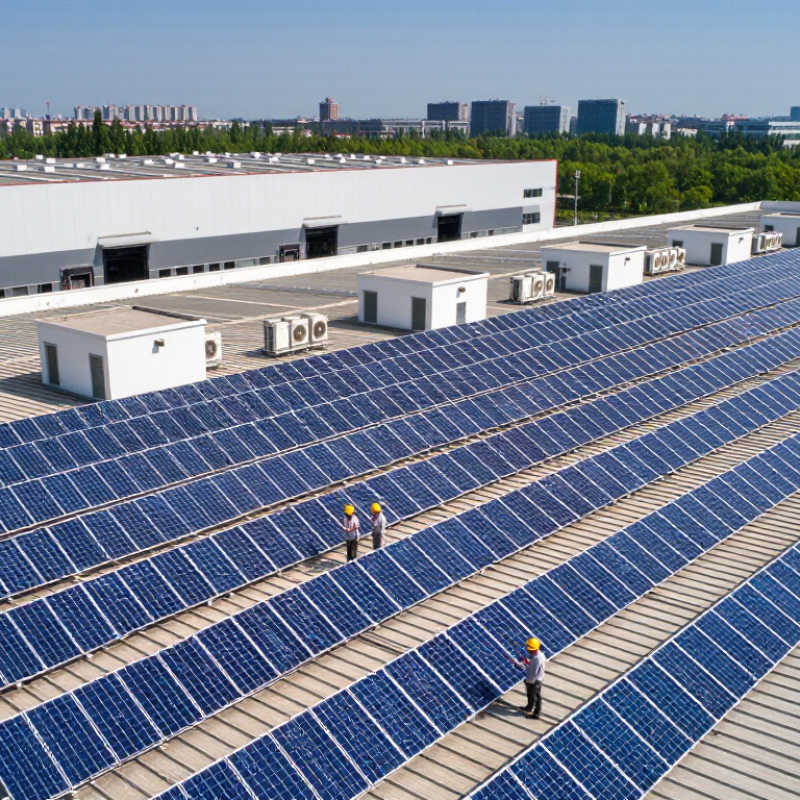
Commercial solar selection should begin with the building’s actual energy behavior, not a panel catalogue. Review at least twelve months of utility bills, interval data, and seasonal demand peaks. A warehouse may use little electricity overnight but surge during production hours. Offices often show different patterns. Future expansion also matters.
Tip 1: Build a realistic load profile. Separate daytime consumption from evening demand. Compare weekday and weekend usage. Do not size the system from annual consumption alone. One common mistake is overlooking demand charges, which can strongly affect project value. Include HVAC startup loads, refrigeration cycles, and planned equipment.
Tip 2: Inspect the site in detail. Check roof orientation, usable area, shading, drainage, and structural capacity. A nearby tree may cast shadows across several module rows by late afternoon. Measure roof temperatures and consider local wind, snow, dust, and salt exposure. Ground-mounted systems need soil information, access roads, and space between rows. These details influence layout, maintenance, and energy yield. A preliminary desktop review is useful, but it can miss serious site constraints. A physical inspection remains essential.
Selecting panels for a commercial project starts with the site, not the brochure. In commercial projects, monocrystalline modules usually provide high efficiency when roof space is limited. Polycrystalline panels may cost less, but they often need more area for equal capacity. Thin-film panels can perform steadily in heat and weak light. However, their lower efficiency may increase racking and installation costs. The right comparison focuses on energy yield, not rated watts alone.
Review efficiency, temperature coefficient, degradation rate, and low-light behavior together. A panel rated at 23 percent efficiency may not produce the most annual energy. Hot roofs reduce output, so temperature performance matters during summer peaks. Bifacial designs can add yield on reflective surfaces, but only with suitable spacing and mounting conditions. Shadows and maintenance paths can erase theoretical gains. Small layout errors become expensive.
During site assessments, compare independent test data with the project’s hourly weather model. Check mechanical load ratings, connector compatibility, operating temperature range, and documented degradation assumptions. Ask whether testing reflects real mounting conditions. It rarely does perfectly. I have seen teams choose the highest-efficiency panel, then lose yield through poor orientation and inverter clipping. A reliable comparison should show energy per square meter, expected annual output, access requirements, warranty terms, and total installed cost. Forecasts guide decisions, but they are not promises.
Compare panel technologies, efficiency, and long-term performance. The values below are representative commercial-module figures and may vary by product, climate, installation angle, and operating conditions.
How to use this comparison: Higher efficiency can reduce the roof area required for a target capacity, while higher retained output indicates stronger long-term energy performance. Review temperature behavior, warranties, shading conditions, structural loads, and total system cost before making a final selection.
For commercial projects, panel selection should begin with the site, not the brochure. A roof near a coast faces salt mist, strong gusts, and humid nights. An inland warehouse may face dust, hail, freezing temperatures, or heavy snow. Record these conditions before comparing prices. Small details matter.
Review durability through independent test reports and traceable quality records. Look for certification to IEC 61215 for design qualification and IEC 61730 for safety. These standards are useful, but certification is not a promise of perfect performance. Check the testing laboratory, certificate scope, production site, and validity date. Ask for mechanical-load results, hail testing, thermal cycling, damp-heat exposure, and UV resistance. A strong frame and sealed junction box can prevent expensive failures. Inspect connector compatibility too.
Climate resistance needs numbers, not vague claims. Compare wind and snow-load ratings with the engineer’s site calculations. For coastal locations, request salt-mist data and corrosion protection details. For hot regions, study the temperature coefficient and ventilation requirements. Review the expected degradation rate over the project life. Warranties also deserve careful reading. They may exclude poor installation, unusual pollution, or unauthorized repairs. A recurring field lesson is clear: the lowest purchase price can hide difficult replacement work and lost generation. Still, no document replaces a site inspection. Leave room for doubt.
For commercial projects, manufacturer reliability deserves more than a polished brochure.
Review audited production records, financial stability, factory quality controls, and independent test results. The IEA PVPS Task 13 report identifies about 0.5% annual module degradation as a common planning assumption, though field results vary by climate and installation quality. Ask for evidence from hot, humid, snowy, or coastal sites.
Warranties must be practical, not decorative. Check product coverage, performance guarantees, exclusions, transfer rules, and the process for making a claim. A 25-year performance warranty means little if the manufacturer cannot be reached in year twelve. NREL’s PV Lifetime Project has documented degradation patterns across real systems, showing why project owners should examine conditions behind warranty assumptions. Read the small print.
Support can protect revenue when a site faces a failed inverter, damaged module, or delayed replacement. Request response-time commitments, local service capacity, spare-parts policies, and escalation contacts. The Solar Energy Industries Association reported continued strong growth in U.S. solar installations, increasing the need for dependable long-term service networks. Keep written records of promised support.
One weakness remains. Reliability reports rarely predict every project outcome. I would compare factory data with references from similar climates and roof designs. Then test the support line before signing. A real answer beats a perfect presentation.
Selecting solar panels for a commercial project starts with financial discipline, not panel efficiency alone. Include equipment, engineering, labor, interconnection, permits, insurance, land, financing, maintenance, and eventual inverter replacement. IRENA’s Renewable Power Generation Costs in 2023 reported a global weighted-average solar PV LCOE of about $0.044 per kWh. However, that figure is not your project’s price. Electricity tariffs, grid charges, financing rates, and local construction costs can change the result sharply.
Build an energy model using site-specific irradiation and realistic system losses. NREL research commonly uses about 0.5% annual PV degradation for crystalline-silicon planning. That small decline compounds over twenty-five years. It matters. Compare annual savings against loan payments, operating costs, and lost production during maintenance. Calculate net present value, internal rate of return, payback period, and levelized cost of energy. Test conservative, expected, and optimistic cases. No forecast is clean.
Long-term value also depends on warranty terms, temperature performance, cleaning access, monitoring quality, and replacement logistics. A cheaper panel may create higher labor costs if failures require difficult roof access. A higher-efficiency panel may reduce mounting and land requirements, yet deliver weak returns when its price premium is excessive. Review degradation assumptions carefully. Then challenge them. Include electricity-price changes, export limits, curtailment, taxes, and policy uncertainty. Industry reports provide benchmarks, not promises; an independent engineer and qualified financial adviser should verify the final model.
Monocrystalline panels usually provide higher efficiency in tight areas. Polycrystalline panels may cost less but need more roof space. Thin-film panels can perform steadily in heat and weak light. The cheapest option may not be cheapest overall.
No. Compare annual energy yield, energy per square meter, and total installed cost. Review temperature performance, degradation, and low-light behavior. Rated watts alone can mislead.
Hot roofs usually reduce electrical output. Check the temperature coefficient and ventilation requirements. Summer heat can expose weaknesses. I would model hourly temperatures before selecting panels.
They can, but only with reflective surfaces, suitable spacing, and correct mounting. Shadows, dusty ground, and narrow maintenance paths can erase expected gains. The theoretical increase may disappoint.
Coastal roofs may face salt mist, humidity, and strong wind. Inland sites may experience dust, hail, freezing weather, or heavy snow. Record these details before comparing prices. Small conditions matter.
Check design, safety, hail, thermal cycling, damp-heat, UV, and mechanical-load results. Confirm the laboratory, production site, certificate scope, and validity date. Certification helps. It is not perfection.
Review product coverage, performance guarantees, exclusions, transfer rules, and claim procedures. Check whether poor installation or unusual pollution voids coverage. Read it twice. A long warranty may still provide weak practical protection.
Request response times, local service capacity, spare-parts policies, and escalation contacts. Compare references from similar climates and roof designs. Test the support line before signing. A polished presentation proves little.
Selecting the right solar panels is essential for achieving reliable performance and strong financial results in a commercial project. To understand how to select solar panels for commercial projects, begin by defining the site’s energy demand, available installation area, roof or ground conditions, shading, and local climate. Then compare panel technologies, efficiency ratings, temperature performance, degradation rates, and expected energy output to identify the best fit for the project’s operating requirements.
Durability and climate resistance should also be carefully evaluated through relevant certifications, testing standards, and protection against wind, moisture, heat, and other environmental stresses. Review the manufacturer’s reliability, warranty coverage, technical support, and long-term service capabilities before making a decision. Finally, calculate the complete investment, including equipment, installation, maintenance, replacement, financing, and potential energy savings. A panel with a slightly higher initial cost may provide better long-term value through improved performance, dependable operation, and stronger returns over the project’s lifespan.

Halkirk Solar